
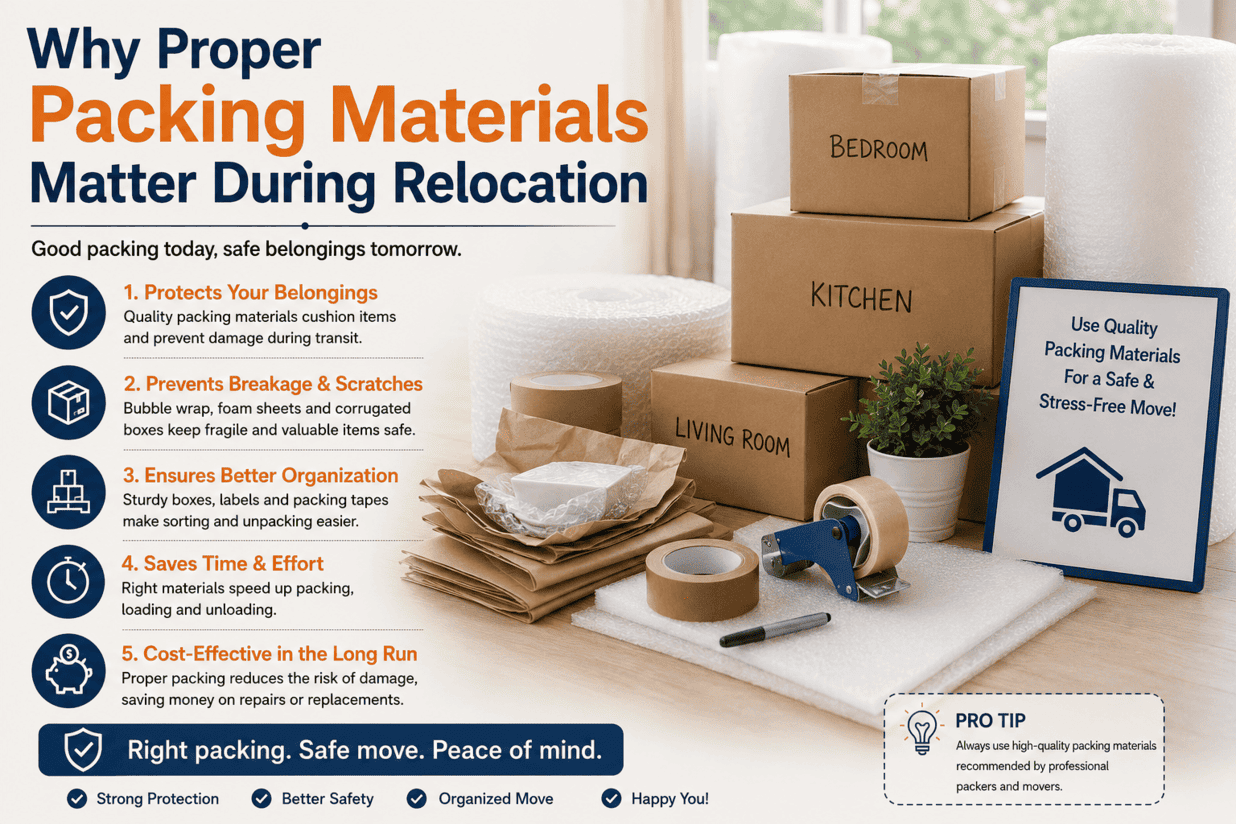
Why Packing Materials Matter During Relocation | Unicon Packers
Moving homes is one of the most emotionally and physically demanding experiences a family can go through. You are not just shifting boxes from one place to another. You are moving your memories, your valuables, and everything that makes a house feel like home.
In all the chaos of relocation, one thing that often gets underestimated is the quality of packing materials. Most people focus on finding a truck or comparing quotes, and packing supplies end up as an afterthought. That is usually when things go wrong.
After years of working in the relocation industry, I can tell you that a cracked television screen, a broken crockery set, or a scratched wooden cabinet almost always traces back to one root cause: the wrong packing materials, or no proper packing at all.
The Real Cost of Poor Packing
People often try to save money by reusing old newspaper, thin plastic covers, or flimsy cardboard boxes collected from a grocery store. It feels practical in the moment. But consider what happens on the road.
A loaded truck moves through traffic, goes over speed breakers, and sometimes travels hundreds of kilometres. Every jolt, every sharp turn, and every sudden brake transfers force directly to the items inside. If those items are not properly cushioned and secured, damage is almost inevitable.
A single broken appliance or cracked antique piece can cost far more to replace than what you would have spent on proper packing supplies. The short-term saving becomes a long-term regret.
What Goes Wrong Without the Right Materials
Here are some real scenarios that happen more often than people realize:
1. Glassware and crockery shatter when packed loosely in thin cardboard without any internal cushioning. Even small movements can cause them to knock against each other.
2. Electronic items like monitors, mixers, and home theatre systems develop internal damage when placed in boxes without foam lining. The vibrations during transport affect sensitive components.
3. Wooden furniture gets surface scratches and dents when not wrapped in protective film or thick blankets. Edges are especially vulnerable.
4. Clothes and soft items pick up moisture, dust, or even mildew if packed in non-breathable plastic bags for a long journey.
5. Books and documents warp or tear when packed in boxes that are too large with empty spaces inside, causing them to shift around.
None of these damages need to happen. With the right packing materials applied correctly, everything can reach the destination just as it left.
Understanding the Different Types of Packing Materials
Professional movers use a specific set of materials, each chosen for a particular purpose. It is not random. There is thought behind every layer.
1. Corrugated Cardboard Boxes
These are the workhorses of any relocation. A good corrugated box is double-walled, sturdy, and available in different sizes suited for different item categories. Small boxes for heavy items like books, medium boxes for kitchen appliances, and large boxes for lighter bulky items like pillows or clothes.
The key is using the right size. Oversized boxes with loose items inside are a recipe for damage. The items shift, collide, and compress unevenly.
2. Bubble Wrap
Bubble wrap is ideal for fragile items: glassware, pottery, picture frames, lamps, and electronics. The air-filled pockets absorb shock effectively. When wrapping breakables, experienced packers ensure complete coverage with no exposed corners.
Thin single-layer bubble wrap works for lightweight fragile items. Heavier or more delicate pieces need thick anti-static bubble wrap that provides a denser protective layer.
3. Stretch Film or Cling Wrap
This transparent film is wrapped tightly around furniture pieces, bundled items, and appliances. It serves two purposes: holding parts together (like drawer handles and cabinet doors) and providing a layer of dust and scratch protection.
Stretch film does not add cushioning on its own, but it is excellent for keeping surfaces clean and preventing loose components from moving during transit.
4. Corrugated Sheets and Foam Padding
Flat corrugated sheets are placed between plates, mirrors, framed artwork, and glass surfaces to prevent direct contact and reduce breakage risk. Foam padding fills gaps inside boxes, preventing items from sliding. This is especially important for electronic gadgets, cameras, and other precision equipment.
5. Packing Tape and Reinforcement Strips
A box is only as strong as how it is sealed. Low-quality tape peels off under weight and pressure. Professional movers use heavy-duty packing tape that bonds firmly and holds the box together even under load. Seams are sealed on all sides, not just the top, so the box maintains its structural integrity throughout the move.
6. Packing Paper and Tissue Paper
Clean unprinted packing paper is used for wrapping items that might be stained by newsprint ink. Fine crockery, white goods, and light-coloured fabrics need this extra care. Tissue paper is used for delicate items like ornaments and jewellery.
How Professional Movers Think About Packing
At Unicon Packers and Movers, the packing process begins with a proper assessment. Before a single sheet of bubble wrap is rolled out, the team takes stock of what needs to move, identifies items that need special handling, and plans the packing sequence accordingly.
Fragile items are always packed last and loaded last so they can be unloaded first and placed safely without other boxes stacked on top of them. Heavy items are packed in smaller, manageable boxes. Odd-shaped items are custom-wrapped to fill their unique dimensions without stress points.
This kind of systematic approach is something difficult to replicate on your own, especially when you are already juggling the emotional and logistical demands of a move.
Packing Materials Also Protect You Financially
There is a practical angle here that is worth mentioning. Reputable moving companies offer insurance coverage for goods in transit. However, insurance claims depend on proper documentation and proof that items were packed adequately.
If a valuable item is damaged and it was packed in a thin plastic bag or a torn grocery box, the claim becomes complicated. When professionally packed materials are used and documented, claims are cleaner and settlements are smoother.
Investing in quality packing also means fewer surprises when you open boxes at the new home. Unpacking becomes a much calmer experience when everything arrives intact.
A Note on Sustainability
One concern some families raise is the environmental impact of using so much packing material. This is a fair question. Many professional packers today reuse boxes in good condition and recycle materials wherever possible. Cardboard is fully recyclable. Bubble wrap and stretch film, while plastic-based, can be collected and sent for recycling rather than landfilled.
Choosing a company that is mindful about material reuse is worth asking about when you are making your moving decision.
Making the Right Choice for Your Move
Relocation is stressful enough without the added worry of whether your belongings will arrive safely. The good news is that this is one worry you can completely eliminate with the right professional support.
The team at Unicon Packers and Movers brings years of hands-on experience in handling relocations of all sizes, from compact apartments to large family homes. Every item is treated with care, every material is chosen with purpose, and every box is packed to withstand the realities of transit.
If you are planning a move and want the peace of mind that comes from knowing your belongings are in capable hands, choosing a reliable packer who takes materials seriously is not a luxury. It is simply the smart way to move.
Good packing is invisible when done right. You only notice packing when it fails. And with proper materials and professional hands, it should never fail.


Leave a Reply
You must be logged in to post a comment.